
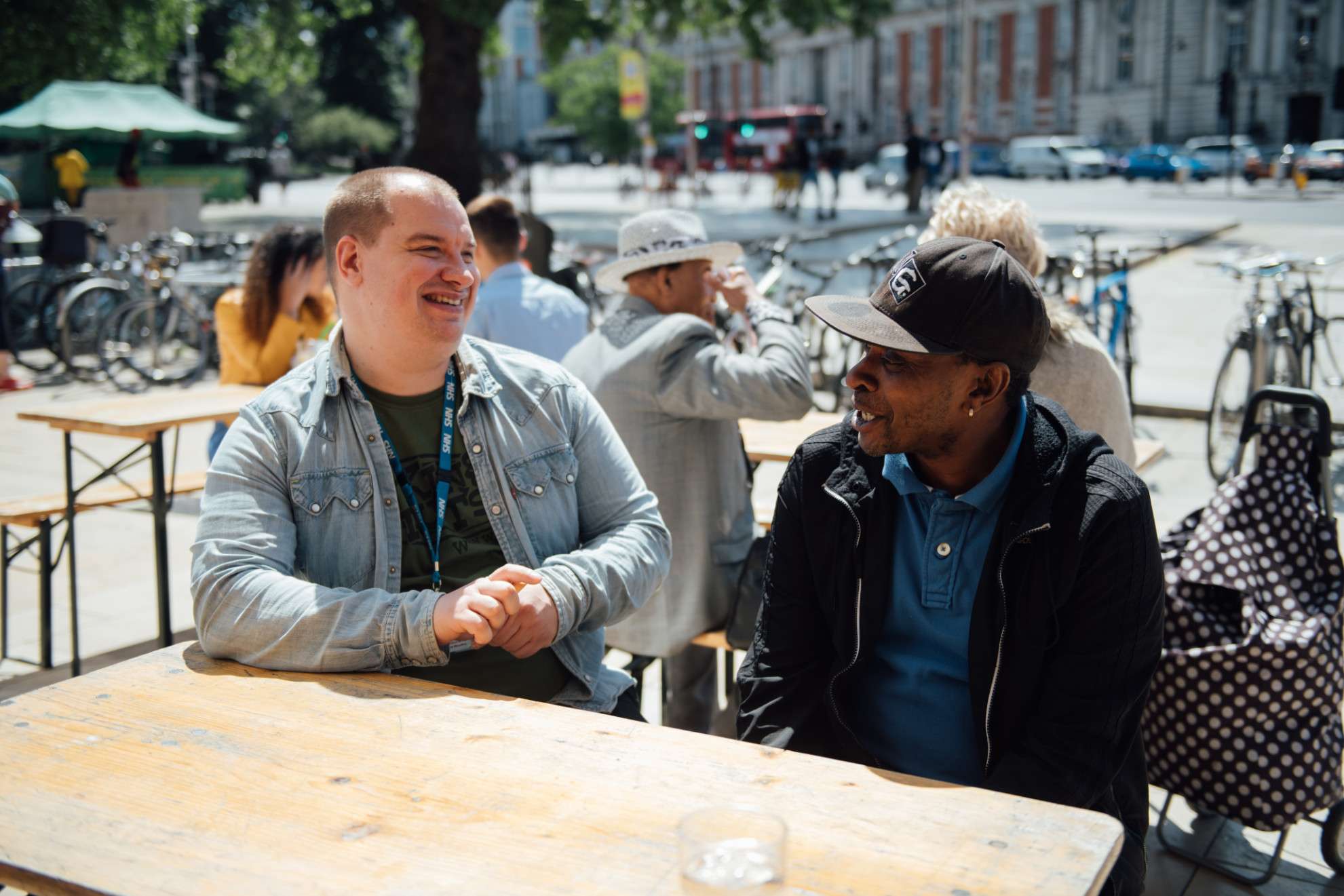
Top tips for engaging the people we work with, from our Peer Advocates
25 October 2021
Martin Murphy, HHPA Project Manager, asked our team working directly with people experiencing homelessness: “What are your top tips for engaging the people you work with?” Here, he shares their expertise.
Earlier on this month, Groundswell was asked to participate in a panel discussion about working well with Inclusion Health groups organised by NHS Citizen, the Public Participation team at NHS England and NHS Improvement.
Prior to the event itself there was an organised chat on Twitter using the hashtags #NHSPublicParticipation and #StartWithPeople.
The Groundswell Homeless Health Peer Advocacy (HHPA) service supports people experiencing homelessness to address physical and mental health issues. We work to improve people’s confidence in using health services and increase their ability to access healthcare independently.
The volunteer Peer Advocates delivering the service have all experienced homelessness themselves; in some areas we also have specialist Care Navigators or Caseworkers – the majority began as volunteers.
So, thinking it might be useful to get feedback from our Peer Advocates on the subject as ultimately, they are the experts, doing the vital day-to-day advocacy work Groundswell is well known for, I contacted seven of our team on the day and asked them a simple question:
“What are your top three tips for engaging the people you work with?”
The results
Their replies are below:Remember their nameRemember the last conversation you had with themDon’t promise anything you can’t deliverListen firstTake your time – be patientWhatever works for them within reasonListen to what they say and do something about itBe clear about what you can and cannot offerGive the individual your full focusAsk them how they are or have beenListen attentivelyBe on timeCup of teaA lot of contactTake random opportunities to connectPolitenessNon judgementalShow understandingWork at their paceWork with their goals and not your ownTry to find common ground – remember you’re just two human beings
Basic considerations?
I found these answers to be somewhat profound considering the complexity of the work we do at times, profound, because they seem to be very basic considerations when working with any individual whatever their socio-economic background.
However, these considerations require time to deliver which sadly seems to have become more and more precious in an NHS and Social Care environment increasingly under pressure to deliver results with fewer resources.
If time spent equals compassion delivered, are we at risk of losing something fundamental to the wellbeing of all of us?